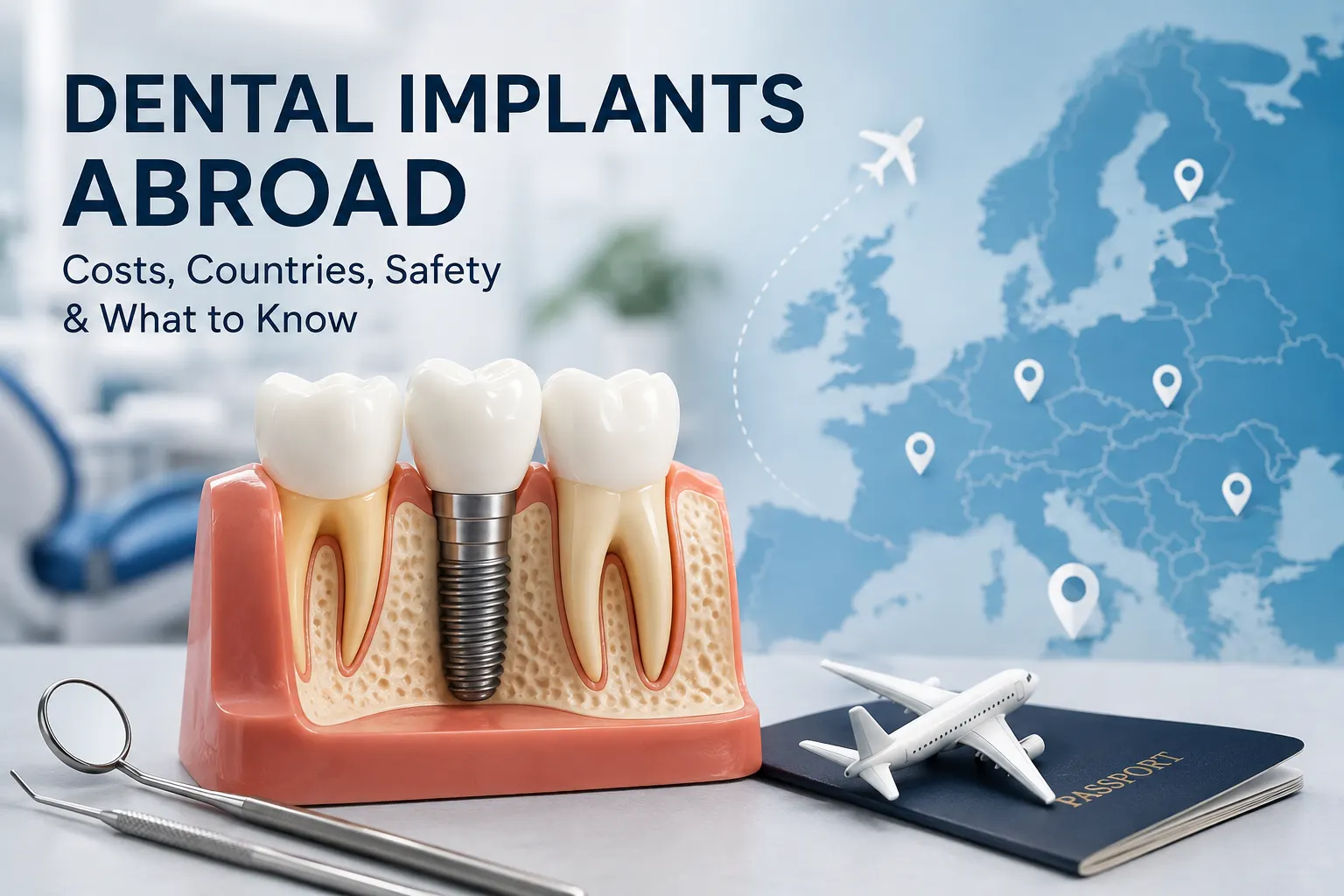
Dental implants can be expensive, so it is understandable that many patients look beyond their home country when comparing treatment.
Travelling abroad can offer access to different clinics, specialists and prices — but the cost of the implant itself is only part of the decision.
Before booking dental implants abroad, it is worth understanding what the advertised price actually includes, how many journeys may be required, who will provide your aftercare and what happens if something goes wrong after you return home.
Why do people travel abroad for dental implants?
Cost is an obvious reason.
Dental implant treatment can involve several components, including examinations, imaging, extraction, the implant itself, an abutment, crown and sometimes additional procedures such as bone grafting.
When several implants are required, differences between private treatment prices can become substantial.
Patients may also travel because they:
want to compare more treatment options
have found a particular implant specialist
want treatment sooner
have family or connections in another country
are combining several dental procedures into one treatment plan
But a cheaper quotation does not automatically mean a cheaper complete treatment journey.
Flights, accommodation, time away from work and return visits all matter.
What does a dental implant price actually include?
This is one of the most important questions to ask.
Two clinics might advertise very different prices while actually offering different packages.
Before comparing quotations, find out whether the price includes:
initial consultation
X-rays or 3D/CBCT imaging
tooth extraction if required
implant fixture
abutment
permanent crown
temporary teeth
anaesthesia
bone grafting if required
medication
follow-up appointments
adjustments
treatment for complications
Ask for a written treatment plan and complete quotation rather than relying on an advertised "from" price.
The NHS similarly recommends calculating the complete cost of treatment abroad, including the possibility of extending your stay and having to make return trips.
Which European countries do people consider?
Patients researching dental treatment abroad frequently compare clinics across Central, Eastern and Southern Europe.
The best destination, however, cannot be determined simply by choosing the country with the lowest average prices.
Standards, qualifications, regulation, facilities and prices can differ between clinics within the same country.
A highly experienced implant dentist in one city may have little in common with another provider a few kilometres away.
Instead of asking only:
"Which country has the cheapest dental implants?"
a better question is:
"Which appropriately qualified provider offers the right treatment for me, with acceptable costs and a realistic aftercare plan?"
Country comparisons can help narrow your search.
They should not replace checking the individual dentist and clinic.
Are dental implants abroad safe?
Dental implant treatment abroad isn't automatically safe or unsafe simply because it takes place in another country.
What matters is the provider, clinician, treatment plan, facilities, regulatory environment and your individual circumstances.
The UK's General Dental Council advises patients considering overseas dental treatment to investigate how dentistry is regulated in the destination country, including whether dental professionals must be registered with a professional regulator.
The GDC also says patients should be assessed by a qualified dentist before receiving a treatment plan and cost estimate.
Be particularly cautious if substantial treatment is recommended purely from photographs, messages or a very limited assessment.
Check who will actually treat you
Before paying a deposit, ask for the full name of the dentist responsible for your treatment.
Then investigate:
their qualifications
professional registration
experience with implant dentistry
how frequently they perform the procedure
which implant system they use
who performs each stage of treatment
what happens if that dentist becomes unavailable
The GDC recommends asking overseas providers about qualifications, regulation, experience, complication rates, aftercare, guarantees and complaints procedures.
Don't be embarrassed about asking detailed questions.
You're considering invasive healthcare, not buying a holiday package.
How many trips will you need?
This is where an attractive headline price can become misleading.
Dental implants often involve stages.
Depending on the treatment plan, a patient may require an initial assessment, implant placement, a period of healing and then another appointment for the final restoration.
Some cases require additional procedures.
Before booking flights, ask:
How many visits are expected?
How long should I stay during each visit?
How long is expected between stages?
What happens if healing takes longer than expected?
Could an additional trip become necessary?
If Clinic A costs £1,000 less but requires another flight, hotel stay and several additional days away from work, the real difference may be considerably smaller.
What happens when you return home?
Aftercare is one of the biggest differences between receiving treatment locally and travelling abroad.
If your implant needs reviewing at home, your original dentist could be hundreds or thousands of kilometres away.
Before treatment, establish:
who provides routine follow-up
whether your UK dentist is expected to provide any aftercare
who you contact if you develop pain or swelling
what happens if the implant becomes loose
what happens if a crown fractures
whether remedial treatment is covered
whether you would need to return to the overseas clinic
who pays for additional travel and accommodation
The NHS specifically advises patients travelling abroad for treatment to understand how aftercare will be coordinated and to consider possible complications before travelling.
What if dental implants abroad go wrong after you return to the UK?
This is particularly important for UK patients.
Having paid privately for dental treatment abroad does not mean you are permanently excluded from NHS dental care.
NHS England's policy says patients who develop an acute oral-health problem or complication after self-funded dental treatment — whether that treatment took place in the UK or abroad — can access NHS assessment and care where appropriate to stabilise their condition.
However, there is an important distinction.
The NHS does not necessarily have to reconstruct or replace privately funded treatment that it would not ordinarily fund. Further treatment remains subject to normal NHS eligibility and clinical criteria.
In practical terms:
Emergency or clinically necessary help is different from expecting the NHS to redo an overseas private implant treatment plan.
That's another reason to establish the overseas clinic's complication and aftercare policy before paying.
Don't assume ordinary travel insurance covers dental treatment
Travelling specifically for planned treatment is different from becoming unexpectedly ill while on holiday.
The NHS warns that most ordinary travel insurance policies will not cover planned treatment abroad, meaning specialist cover may be necessary.
An EHIC or UK GHIC also does not cover travelling abroad specifically for planned medical treatment.
Tell your insurer why you're travelling and establish exactly what is and isn't covered.
Warning signs worth taking seriously
A cheap price isn't itself a warning sign.
But the way treatment is sold can be.
Be cautious if you encounter:
pressure to pay a deposit immediately
substantial discounts that expire within hours
no proper clinical assessment
unclear dentist credentials
reluctance to provide a written treatment plan
vague answers about the implant system being used
little discussion of complications
no clear aftercare arrangement
unclear guarantees
no complaints procedure
promises that sound unrealistic
The NHS specifically identifies hard selling, pressure to decide quickly, failure to discuss complications and lack of aftercare information as reasons to think carefully before booking treatment abroad.
10 questions to ask before booking dental implants abroad
Before paying a deposit, see whether you can confidently answer these:
Who is the dentist performing my implant treatment?
What qualifications and professional registration do they hold?
Have I had an appropriate clinical assessment?
Which implant system will be used?
What exactly does the quoted price include?
How many trips are likely to be required?
What are the significant risks and alternatives?
Who provides my aftercare once I return home?
What happens — and who pays — if something goes wrong?
What is the total cost after travel, accommodation and possible return visits?
If a clinic cannot clearly answer reasonable questions before receiving your money, that itself is useful information.
Are cheaper dental implants abroad worth it?
For some patients, travelling abroad may provide a treatment option they are comfortable with at a price they can afford.
For others, the convenience of having their dentist nearby for consultations, treatment and long-term follow-up may outweigh the potential saving.
There isn't one correct answer.
The mistake is comparing only:
UK price vs overseas price
when the real comparison should be:
complete treatment + clinician + quality + travel + aftercare + potential complications + total cost
Dental implants are intended to remain in use for years.
Taking a little longer to investigate the person placing them is probably worth considerably more than saving a few hours when choosing a clinic.
Would you travel abroad for dental implants?
This is where we'd like to hear from you.
Would a substantially lower price persuade you to travel to another European country for dental implants?
Or would you pay more to have the dentist responsible for your treatment close to home?
If you've already had dental treatment abroad, what was your experience — and would you do it again?
Share your experience or opinion with the EuroCareFinder Community.
Sources and further reading
General Dental Council — Going abroad for dental treatment: guidance covering regulation, consultations, qualifications, aftercare, guarantees and questions patients should ask.
NHS — Treatment abroad checklist: guidance covering research, complications, aftercare, total costs and insurance.
NHS — Going abroad for medical treatment: information about planned overseas treatment, insurance and EHIC/GHIC limitations.
NHS England — Clinical policy for self-funded dental treatment requiring NHS intervention: guidance on NHS care where complications arise following privately funded dental treatment in the UK or abroad.
Medical disclaimer
This guide provides general information and is not dental or medical advice. Dental implant suitability, risks and treatment requirements vary between individuals.
Always obtain an appropriate clinical assessment from a qualified dental professional before making treatment decisions. Independently verify a provider's professional registration, treatment plan, costs and aftercare arrangements before arranging dental treatment abroad.

About the contributor
Jevi Hysa
Community Contributor
This contributor publishes information and discussion for the EuroCareFinder Community.